
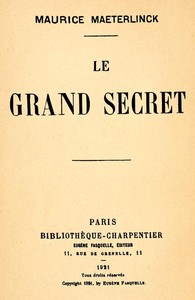
Le grand secret by Maurice Maeterlinck
Maurice Maeterlinck's Le Grand Secret (The Great Secret) is a strange and fascinating beast. It sits somewhere between a philosophical novel and a metaphysical thriller. Published in 1921, it comes from a writer best known for his symbolist plays, and you can feel that theatrical, idea-driven energy on every page.
The Story
The plot revolves around a central, tantalizing concept: there exists a single, ultimate Secret about the nature of life, death, and the universe. This isn't a minor historical fact or a scientific formula—it's the fundamental truth behind everything. A small, secretive society is dedicated to protecting this knowledge, believing that if it were ever revealed, it would cause absolute chaos, destroying religion, science, and the very foundations of human society. The story follows various characters—seekers, skeptics, and guardians—as they brush up against the edges of this Secret. We see the extreme, sometimes violent, lengths the guardians go to in order to preserve their silence. The tension doesn't come from action scenes, but from the unbearable weight of the unknown and the moral question: is some knowledge too dangerous to possess?
Why You Should Read It
What grabbed me wasn't a twist or a villain, but the atmosphere. Maeterlinck builds a incredible sense of suspense around an absence. The Secret itself is never named, which is the whole point. It forces you, the reader, to project your own deepest questions onto it. Is it proof of an afterlife? Evidence we're alone in the void? The realization that consciousness is an illusion? The book becomes a mirror. It's also a stark look at paternalism and control. Who gets to decide what humanity is ready to know? The guardians see themselves as benevolent shepherds, but their methods are authoritarian. It’s a debate about truth versus stability that feels incredibly relevant today.
Final Verdict
This isn't a book for someone looking for a fast-paced plot or clear answers. Le Grand Secret is perfect for readers who love to be unsettled by big ideas. If you enjoy the creeping dread of Shirley Jackson, the existential puzzles of Jorge Luis Borges, or just sitting with a story that challenges what a novel can even be, you'll find a lot to chew on here. It’s a quiet, haunting, and brilliantly frustrating read that stays with you long after you've closed the cover.
This content is free to share and distribute. You can copy, modify, and distribute it freely.
Joshua King
1 year agoI was skeptical at first, but the flow of the text seems very fluid. I learned so much from this.


Donald Perez
4 months agoI have to admit, the character development leaves a lasting impact. I will read more from this author.