
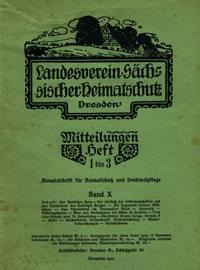
Landesverein Sächsischer Heimatschutz — Mitteilungen Band X, Heft 1-3…
Let's be clear: this is not a novel. Landesverein Sächsischer Heimatschutz — Mitteilungen Band X, Heft 1-3 is exactly what it says on the tin—a bound volume of three quarterly bulletins from a Saxon heritage protection society, published in 1931. There's no single narrative. Instead, you get a snapshot of a group's obsessions: detailed inventories of historic farmhouse types in the Erzgebirge region, notes on preserving traditional window shutters, records of fading folk customs, and essays on landscape conservation.
The Story
There is no traditional plot. The 'story' is the collective effort of the society's members. Each article is a small act of preservation. One writer argues passionately against the use of modern roofing materials in village centers. Another has meticulously cataloged the different styles of wooden gates in a single valley. A third transcribes old weaving songs from elderly locals. Read together, these fragments build a picture of a cultural identity these people believed was under threat from industrialization and modernization. The driving force is this quiet, urgent race against time to document a way of life they saw disappearing.
Why You Should Read It
This is where it gets interesting. Reading this today is a layered experience. On one level, it's a practical guide to the material culture of 1930s Saxony. But the subtext is powerful. You're seeing a region define itself through its hayracks and folk costumes just a few years before the Nazi regime would co-opt 'Heimat' (homeland) for its own propaganda. There's an innocence to their focus on barns and ballads, but knowing what comes next casts a long shadow. It makes you wonder about the line between cultural preservation and nationalism, and about all the everyday histories that get written out of the grand narratives.
Final Verdict
This is a specialist's treasure, but with a wider appeal than you'd think. It's perfect for history buffs who love primary sources, architectural historians, or anyone fascinated by how communities build identity. It's also great for readers who enjoy piecing together a bigger picture from tiny, authentic fragments—like an archival puzzle. If you need a fast-paced story, look elsewhere. But if you're curious about the quiet, meticulous work of memory that happens in the background of history, this volume is a strangely compelling window into that world.
This title is part of the public domain archive. Feel free to use it for personal or commercial purposes.
Kenneth Jones
1 year agoAfter finishing this book, the clarity of the writing makes this accessible. Definitely a 5-star read.
Steven Martinez
4 months agoSurprisingly enough, the atmosphere created is totally immersive. I will read more from this author.
William Rodriguez
8 months agoCompatible with my e-reader, thanks.








Susan Scott
4 months agoGreat digital experience compared to other versions.