
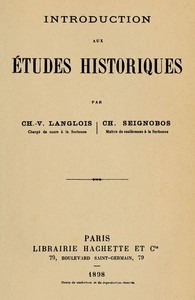
Introduction aux études historiques by Langlois and Seignobos
This isn't a history book with stories of Napoleon or Cleopatra. Instead, think of it as the ultimate 'how-to' manual for the field of history itself. Written over a century ago, it lays out the step-by-step process historians use to turn dusty old papers and artifacts into the narratives we read.
The Story
The 'story' here is the journey of a fact. The book walks you through the whole life cycle of historical knowledge. It starts with finding sources—the letters, laws, and chronicles left behind. Then, it teaches you how to criticize them: Is this document real? Was the author lying or just mistaken? Finally, it shows how to synthesize all these checked facts into a coherent explanation of past events. The central character is the historian-as-detective, and the mystery is the truth of the past.
Why You Should Read It
Reading this is a revelation. It makes you a more critical consumer of any news or story, not just history. You start to see how every narrative is built and where its weak points might be. The authors' passion for getting it right is contagious. They remind us that history isn't a list of settled facts, but an ongoing argument based on evidence. It’s surprisingly empowering to learn the rules of the game.
Final Verdict
Perfect for curious readers, aspiring students, or anyone who loves a good mystery. It’s for the person who asks, 'But how do we *know* that?' While some methods have evolved since 1898, the core principles of skepticism, verification, and clear thinking are timeless. It’s a foundational text that quietly teaches you how to think better.
This work has been identified as being free of known copyright restrictions. Preserving history for future generations.
Charles Hernandez
1 year agoNot bad at all.
Logan Jackson
6 months agoJust what I was looking for.
David Sanchez
6 months agoAfter finishing this book, the clarity of the writing makes this accessible. Thanks for sharing this review.
Andrew Ramirez
1 year agoSimply put, the arguments are well-supported by credible references. I couldn't put it down.



Ashley Sanchez
1 year agoRecommended.