
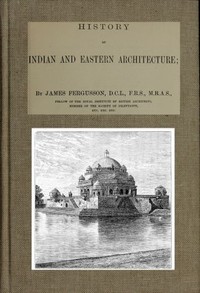
History of Indian and Eastern Architecture by James Fergusson
Okay, let's be clear: this is not a beach read. Published in the 1870s, James Fergusson's History of Indian and Eastern Architecture is a massive, foundational work. But don't let that scare you off. Think of it as the original, grand blueprint for understanding a huge part of the world's built heritage.
The Story
There's no plot in the novel sense. Instead, Fergusson takes you on a structured tour. He starts by explaining his core belief: architecture is the truest history of a people. Then, he divides and conquers. You'll travel from the early Buddhist cave temples to the soaring Hindu towers of the south, from the elegant symmetry of Mughal mosques to the intricate wooden structures of the Himalayas. He doesn't stop at India. He pushes east into Burma, Cambodia (Angkor Wat was just being 'rediscovered'), Java, and beyond, looking for shared ideas and unique expressions. The 'story' is his relentless quest to categorize, compare, and explain why things look the way they do.
Why You Should Read It
You read this for the voice and the vision. Fergusson is present on every page. He's confident, often dismissive of other scholars, and full of strong opinions (some of which, like his views on certain styles being 'degenerate,' are very much products of his colonial-era mindset and are critically examined today). That's what makes it engaging. You're not getting sterile facts; you're getting a passionate argument. It’s fascinating to see how he pieces together a history from ruins, coins, and texts. When he points out how climate dictated roof styles, or how a change in religious ritual forced a change in temple design, you see these buildings come alive as solutions to human problems. It teaches you how to look, not just what to see.
Final Verdict
This is for the curious traveler, the history enthusiast who wants depth, and anyone visiting Asia's monuments who craves more context than a guidebook can offer. It's perfect for architecture students needing historical grounding and for readers who enjoy primary sources—hearing history directly from a pivotal, if flawed, figure. It's a demanding but incredibly rewarding journey. Pair it with a modern book on the same subject to see how our understanding has evolved. If you want to know the 'why' behind the wonder, start here.
This digital edition is based on a public domain text. Distribute this work to help spread literacy.
Andrew Sanchez
1 year agoGreat read!
Kenneth Robinson
11 months agoNot bad at all.
Noah Brown
1 year agoAfter finishing this book, the clarity of the writing makes this accessible. Thanks for sharing this review.
Nancy Martinez
1 year agoAmazing book.





Kevin Moore
1 year agoJust what I was looking for.